
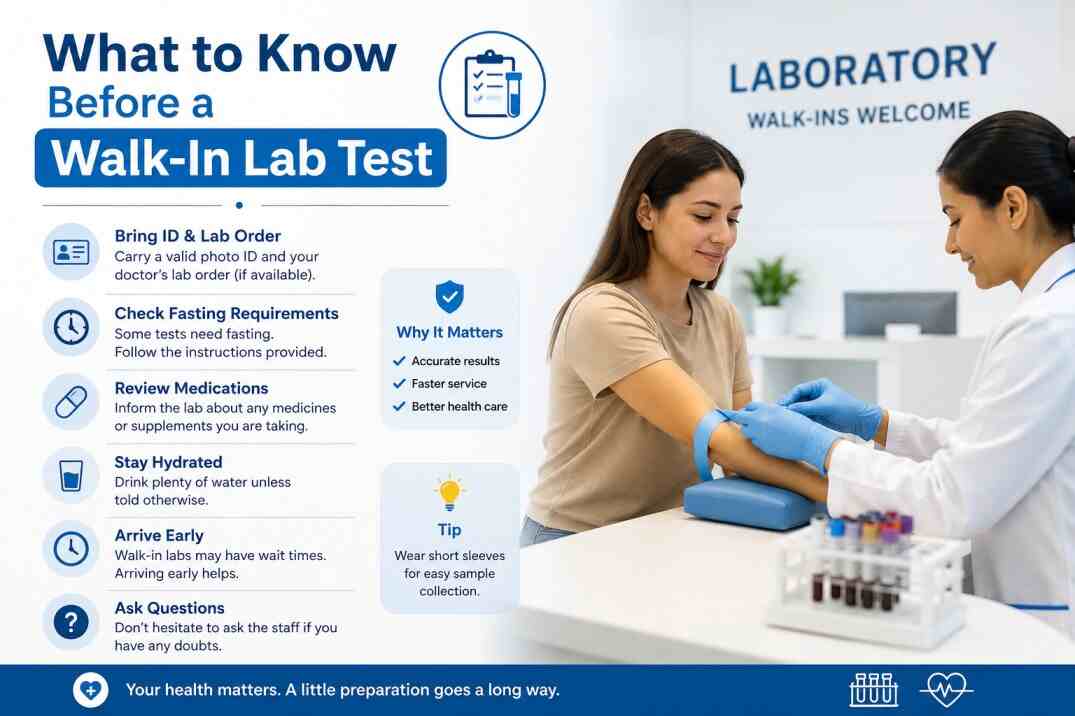
A little preparation can make laboratory testing easier. Learn what to know about fasting, medications, identification, test orders, sample collection, and receiving your results before visiting a walk-in lab.
Laboratory tests are an important part of modern healthcare. They can help healthcare providers screen for certain health conditions, investigate symptoms, monitor existing conditions, and determine whether a treatment is working as expected. Many laboratory tests are simple and require very little preparation, while others may have specific instructions that should be followed before your visit.
If you are planning to visit a walk-in laboratory, knowing what to expect can make the process easier and more comfortable. Before arriving, it is helpful to confirm whether you need to fast, whether you should continue taking your regular medications, what identification or insurance information you should bring, and whether a test order or referral is required.
Before You Arrive
The preparation you need depends on the type of laboratory test being performed. Some blood tests can be completed without any special preparation, while others may require fasting or other instructions. If your healthcare provider gave you specific instructions, follow those instructions carefully.
- Confirm whether fasting is required for your test
- Bring a photo ID and insurance information
- Bring the test order or referral if one was provided
- Have your medication and allergy list available
- Ask whether regular medications should be taken as usual
- Drink water unless you were specifically instructed otherwise
- Wear comfortable clothing that allows easy access to your arm if a blood sample is needed
Do You Need to Fast Before a Lab Test?
Not every laboratory test requires fasting. Some tests can be performed normally after eating and drinking, while certain tests may require you to avoid food for a specific period before the sample is collected. Fasting requirements can vary depending on the test and the instructions provided by your healthcare provider.
If fasting is required, your healthcare provider or laboratory should tell you how long you need to avoid food. In many cases, plain water is allowed and may actually help make a blood draw easier. However, coffee, juice, soda, energy drinks, and other beverages may affect certain test results, so follow the instructions you were given.
If you accidentally eat or drink something when you were supposed to fast, let the laboratory staff know before the test. They can determine whether the test can still be performed or whether it should be rescheduled.
What About Your Medications?
Do not stop prescription medications simply because you are having laboratory testing unless your healthcare provider specifically tells you to do so. Some medications can affect laboratory results, but stopping medication without medical guidance may also create problems.
What Should You Bring?
Having the necessary information with you can help reduce delays during your visit. Depending on the laboratory and the type of test, you may need identification, insurance information, and documentation from your healthcare provider.
Need care today?
Walk-ins are welcome at All Med Urgent Care for urgent care, physical exams, testing, and occupational health visits.
Call (718) 659-0400